
Choosing a window sounds easy until you start comparing all the styles. Sliding, awning, and casement windows may look similar at first, but they work very differently in real homes. Some are better for airflow, some save space, and some give your room a cleaner, brighter feel. The right choice depends on your room size, weather, privacy needs, and the overall vibe you want. No one wants a window that looks good but feels annoying to use every day.
To help you in this endeavor, this guide elaborates on each window type and gives you tips to select one that actually fits your home.
Window Selection Overview GuideSelecting the right window type improves ventilation, thermal efficiency, comfort, and overall home functionality. Sliding windows suit wider spaces with modern aesthetics, casement windows provide superior sealing and airflow, while awning windows work best in compact or moisture-prone areas. Factors like glazing quality, drainage systems, weather resistance, locking mechanisms, and installation placement influence long-term performance. Choosing durable, energy-efficient windows helps reduce energy consumption, enhance indoor comfort, and maintain structural reliability across different climate conditions. |
The Best Window Options for Your Space
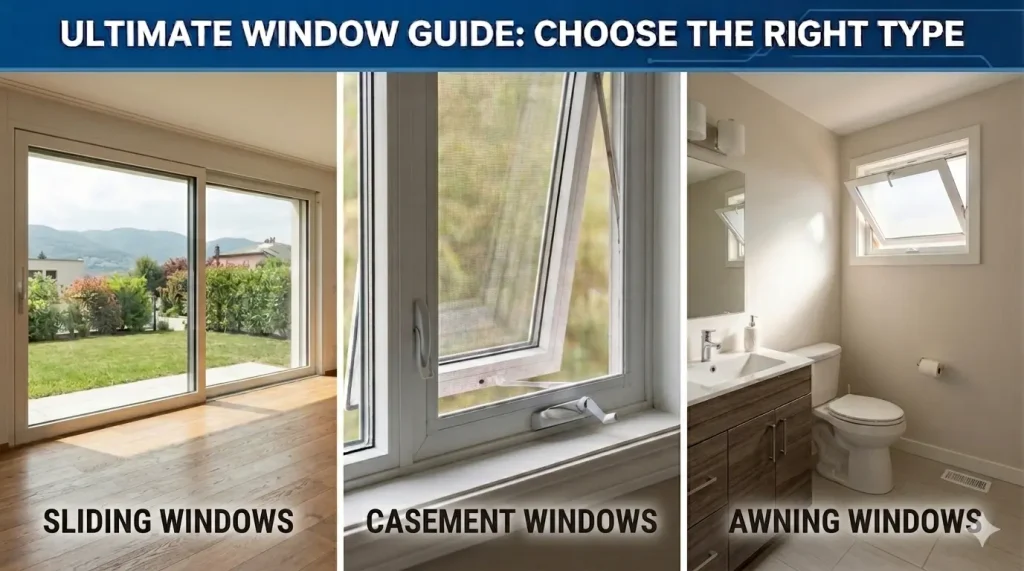
Sliding Windows
Homes with wider wall spaces and rooms that require unobstructed outdoor views need sliding windows the most. These operate horizontally along a track; their design is simple, thus allowing for smooth operation and low maintenance. In a modern version of sliding windows, Low-E glass is utilized, which helps improve thermal efficiency while giving natural light and ventilation. The above features of these windows make them a better option for contemporary homes, also because they maximize space without projecting inward or outward.
Factors to consider while choosing Sliding Windows
- Air Leakage & Glazing Performance: Make sure to get double or triple glazing. Sliding windows generally have higher air infiltration, so tight sealing systems are important for energy savings.
- Track Quality & Smooth Operation: The smoothness of sliding windows depends heavily on the track system. So, the tracks must be made up of aluminum or vinyl, with quality rollers to ensure easy movements, prevent sticking, noise, and faster wear.
- Security Features: Look for the multi-point pull-tight locks or secondary night latches, since sliding windows use simple latch locks. So, it’s important to choose models with reinforced frames, security pins, or laminated glass to get improved protection.
- Glass Strength and Safety: Due to the larger surface area, sliding windows should use tempered or laminated glass. This helps windows placed low to the floor or in high-traffic areas to meet the building safety codes and improve impact resistance.
Casement Windows
Hinged at the side and opening outward with a crank handle, casement windows offer excellent, strong air sealing. Casement Windows are one of the most energy-efficient window types, as they have the sash press technique, which, when pressed tightly against the frame, reduces air infiltration. Some of the most recommended casement window options for homeowners in the U.S. are vinyl and fiberglass; trusted brands like Simonton windows often specialize in these durable materials to ensure long-term weather resistance.
Factors to consider while choosing Casement Windows
- Glazing Bead and Drainage: Inspect the glazing pocket and weep system. A technically sound casement window will feature a sloped sill and internal drainage channels to move moisture away from the insulated glass unit, preventing seal failure and wood rot in the frame. In accordance with this, a trusted window supply company recommends fusion-welded frame corners and concealed weep hole designs that improve water evacuation efficiency. .
- Ventilation capability: These windows are ideal for airflow-focused rooms, which are more effective than many other window types.
- Weather Resistance: Due to their compression seal design, casement windows perform well under high wind pressure and heavy rainfall, minimizing drafts and water penetration when properly installed.
- Structural Wind Load Resistance: When selecting the casement windows, verify the window’s performance grade (PG) rating to ensure the hinges and frames can withstand local wind pressure.
Awning Windows
For tiny homes and places where frequent rain and moisture require windows that can remain open during light showers, awning windows can be an ideal choice. Hinged at the top and open outward from the bottom, these windows create a protective awning effect. As they are frequently paired with large fixed windows, they utilize a perimeter compression seal that effectively blocks outside noise. Their compact structure makes them suitable for bathrooms, basements, and higher wall placements where privacy and airflow are important.
Factors to consider while choosing Awning Windows
- Installation height and placement suitability: Awning windows are often installed higher on walls or in compact spaces like bathrooms and basements. Proper placement ensures privacy while still allowing effective airflow.
- Vertical Placement and Geometry: As these windows are specifically installed higher on walls, they effectively leverage thermal buoyancy, ensuring the escape of warm air while drawing in cooler air. They have a natural canopy design, which makes them the only operable window type that offers ventilation even in heavy rain.
- Friction Hinge and Sash Support: In order to choose these windows, evaluate the friction-stay hinges. They require heavy-duty hardware to support the sash’s weight at any opening angle; this prevents scratches and ensures the sash remains stable in gusty wind conditions.
- Dual-Point Locking Precision: Due to their horizontal width, awning windows can be prone to “corner flaring.” A reliable window supplier can suggest the dual-point locking hardware for efficient results. This helps the bottom corners of the sash be pulled uniformly tight against the frame to eliminate gaps that can cause thermal bridging.
Conclusion
Choosing the right window ensures a seamless blend of durability and comfort. By mastering the distinctions between sliding, awning, and casement systems, you can optimize building envelopes for superior thermal performance, ventilation efficiency, and structural integrity. Ready to upgrade? Our team at TWD Supplies provides high-performance, professionally installed windows tailored to your specific needs. Contact us today for a consultation and experience the perfect blend of science and style.
Explore the premium selection at TWD Supplies to find the perfect fit for your home!
FAQs
Q1. Which window type is easiest to clean from inside the house?
Among the most common window types, casement windows are generally easier to clean because the sash opens fully outward for better access.
Q2. Do energy-efficient windows help reduce my utility bills?
Yes, high-performance windows reduce heat transfer, helping HVAC systems work more efficiently in all seasons.
Q3. Are larger windows less energy-efficient than smaller ones?
Nowadays, modern glazing technologies and insulated frames deliver strong thermal performance even in larger window systems. So these windows are reliably energy-efficient.
Q4. Can replacing old windows improve property value?
If you upgrade the old window with a more energy-efficient option, then definitely it can add more value to your property.
Q5. Can different window styles affect indoor temperature control?
Yes, window design and sealing performance directly influence insulation and indoor energy efficiency.