
Choosing the right window frame material is one of the most important decisions to make when you are building or renovating your house. But with so many material options like PVC, aluminum, or wood, the choice can get difficult. It’s important to consider a few key factors before deciding, such as:
- How warm and cool your house will be with a particular window frame material
- How well they control noise
- How much maintenance do they require
- How energy efficient they are
And much more… so, to make the decision easier for you, through our blog, we will help you learn how to compare those materials in a simple way, so you can choose the best material for your home. Let’s begin!
Window Frame Material OverviewChoosing the right window frame material depends on climate, strength, durability, maintenance, cost, and design preferences. Vinyl frames offer energy efficiency and low maintenance, wood frames provide natural insulation and classic appeal, aluminum frames support modern large-glass designs, while steel frames deliver maximum strength and security. Each material performs differently in various environments, helping improve indoor comfort, noise control, structural support, and long-term performance for residential and commercial spaces. |
Why Do Different Window Frames Need Different Materials?
Climate and Thermal Performance
Window frame materials are chosen based on how they control heat in different climates. PVC and fiberglass keep heat inside in cold areas, whereas aluminum with thermal breaks works in hot areas. Wood gives balanced insulation and helps maintain a comfortable indoor temperature.
Strength and Structural Requirements
Different window materials are chosen based on their strength and size, such as aluminum, which is strong and supports large glass and tall buildings. Wood is good for medium sizes, but it can bend, and PVC is best for small to medium windows and lighter use.
Durability Against the Environment
The selection of window frames depends on how they work in different weather conditions. Some materials resist rust and water, some stay fine during heavy rain, others handle strong force well, while some need regular care to avoid damage from heat, moisture, and changing climate conditions.
Cost and Maintenance Needs
Cost and care needs also affect the choice of window frame. Some of the materials are low-cost but need regular fixing and repainting. While others are expensive at first, they stay strong for years with little care. This helps people manage money while ensuring long-lasting use and ease.
Design, Comfort, and Performance Features
The style and uses of the materials also decide the choice of window frames. Some of them give a modern look with slim edges, while others fit traditional designs with more detail. Certain types help reduce outside noise and improve safety, while others let in more fresh air and natural light easily.
Comparing Various Window Frame Materials
| Material | Energy Efficiency | Maintenance | Strength & Durability | Best Use |
| Vinyl Frames | Very high – keeps heat in and out effectively | Very low – easy to maintain | Good for everyday use | Homes needing comfort and energy savings |
| Wood Frames | High – good natural insulation | High – needs regular care | Strong but affected by moisture if not maintained | Traditional and premium interior spaces |
| Aluminum Frames | Medium – better with thermal breaks | Low – weather resistant | Strong and lightweight | Modern buildings and large glass windows |
| Steel Frames | Low – needs insulation for better efficiency | Low – needs insulation for better efficiency | Very high – extremely strong | Industrial buildings and high-security areas a |
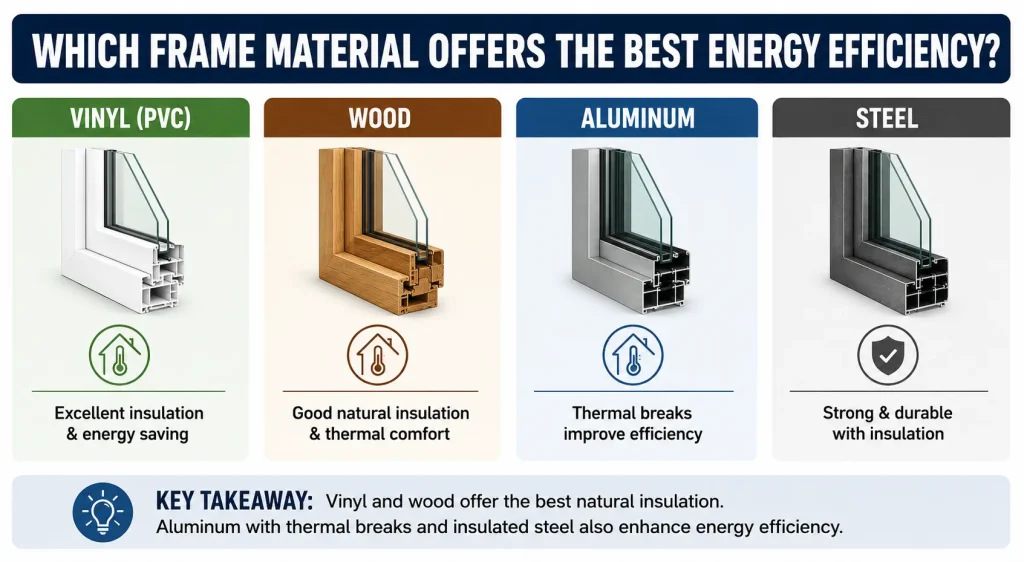
Which Frame Material Offers the Best Energy Efficiency?
Energy efficiency in window frames depends on how well they keep heat inside, prevent any air leaks, and maintain a comfortable room temperature in different weather conditions. Good materials help reduce electricity use for heating and cooling, such as:
Vinyl window frames offer the best energy efficiency because they keep homes warm in winter and cool in summer by reducing heat loss. Wood frames also provide good insulation and help maintain a comfortable indoor temperature, but they need regular care. Aluminum frames can be energy efficient when they include thermal breaks that reduce heat transfer. Steel frames are very strong and durable, but they are the least energy efficient unless proper insulation is added.
Conclusion
Window frames always plays and important role in maintaining the indoor performance, supporting the building structure, and matching them with different architectural styles. Good-quality frames also work better for different weather conditions and last longer with proper care. If you want reliable wholesale windows online shopping, TWD Supplies offers you very durable and professionally designed window solutions for modern residents and commercial buildings.
Shop durable, energy-efficient window frames from TWD Supplies and upgrade your home with stylish, strong, and long-lasting solutions today!
FAQ’s
Q1. Why are slim-profile frames mostly preferred in modern commercial buildings?
Slim-profile frames are used in modern commercial buildings because they hold large glass panels, bring in more natural light, give a clean modern look, and still provide good strength and support for the building structure.
Q2. Which window frame option performs better in coastal environments?
Window frames that resist moisture, salt air, and rust work better in coastal areas. They last longer, need less maintenance, and handle humid weather conditions more effectively than frames with lower durability or protection.
Q3. How does frame design affect indoor noise reduction?
Frame design helps reduce noise by blocking outside sound through tight sealing and better insulation. This keeps rooms quieter and more comfortable, especially in busy areas with traffic, construction, or other outside disturbances.
Q4. Why is frame surface treatment important for durability?
Surface treatment protects window frames from rust, water, sunlight, and weather damage. It helps them stay strong, look better for longer, and reduces damage caused by outdoor conditions and regular environmental exposure.
Q5. What makes certain frame systems suitable for high-rise projects?
Some window frame systems are good for high-rise buildings because they can handle strong winds, support heavy glass, stay stable at tall heights, and provide better strength and safety for large structures.