
These days, more and more homeowners are turning to wooden entry doors, and it’s easy to see why. They add a touch of natural beauty, boost curb appeal, improve energy efficiency, and offer solid security. But while they have plenty of advantages, choosing the right wooden door isn’t as simple as picking the one that looks best. Many people make common mistakes during the selection process, which can lead to problems like warping, poor insulation, and high maintenance down the line. Factors like climate, wood type, finish quality, and overall design all play a big role in how well your door performs over time. Hence, to help you make the most of your investment, we have listed some common mistakes to watch out for. Let’s look into it!
Key Insights for Selecting the Perfect Wooden Entry DoorChoosing the right wooden entry door requires balancing style, durability, and functionality. Key considerations include selecting weather-resistant wood, ensuring proper insulation, and planning for hardware and security features. Regular maintenance, such as cleaning, sealing, and hardware adjustment, extends the door’s lifespan. Avoiding common pitfalls like incorrect measurements, low-quality sourcing, or ignoring climate effects can save homeowners from long-term issues. Ultimately, a well-chosen and maintained wooden door enhances a home’s appearance, comfort, and safety. |
What Is The Structure Of A Basic Wooden Door?
When you go through this infographic, you will be able to understand the anatomy of a wooden door intimately:
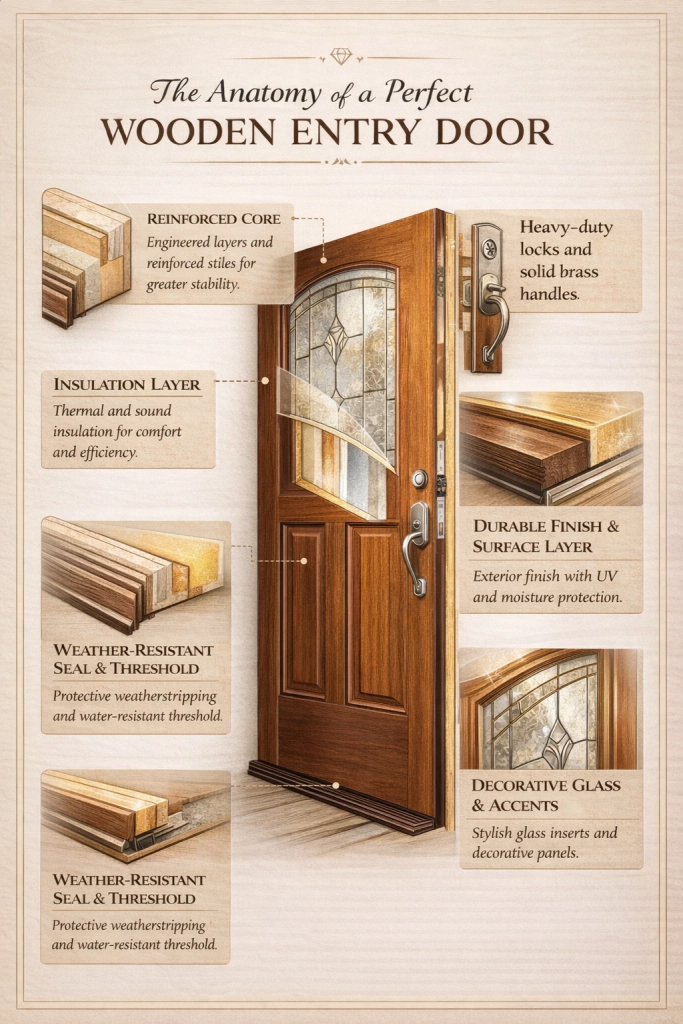
Mistakes to Avoid When Picking a Wooden Entry Door
1. Prioritizing Looks Over Practical Fit
- Many homeowners choose a wooden front door based only on how it looks. This often leads to poor performance if the design does not suit the space or clashes with nearby sliding or patio doors.
- To prevent this, pick a door that fits both your layout and design. Make sure the finish and overall appearance complement other doors around the home, particularly in open or shared spaces.
2. Poor Adaptation to Local Climate
- A wooden door may look strong, but it still may react badly to the weather in your area. Wood that is not treated properly can swell and crack when exposed to heat and rain.
- Choose a wood front entry door that is weather-resistant and sealed with protective coatings. This adds long-term value and protects your door in outdoor areas like patios.
3. Ignoring Energy and Noise Control
- Not all wooden doors are built to handle insulation needs. Some allow air to pass through, causing the home to lose heat or cool air. They may also fail to block outdoor sounds.
- Look for a door with solid insulation and quality seals. A well-built door helps maintain indoor comfort and keeps unwanted noise outside.
4. Buying From the Wrong Source
- Selecting the cheapest option from an unknown vendor might seem appealing, but it often leads to lower quality and less reliable support. Frames may warp, and the outer finish can start to peel or look worn out within a short time.
- It is always better to go with experienced window and door suppliers. A reliable supplier provides better materials, trustworthy warranties, and proper guidance during installation.
5. Incorrect Door Measurements
- A wooden door that is too large or that swings in the wrong direction can create problems during installation. It may scrape surfaces or fail to close properly, especially in tight or shared spaces.
- Measure carefully before purchasing. If the door opens near sliding or patio areas, make sure it fits smoothly without getting in the way.
6. Overlooking Hardware Requirements
- Some wooden doors cannot support modern hardware like smart locks or larger handles. If you install them later, the fit might be off, or the door may need extra drilling.
- Choose entry wood doors that are ready for future upgrades. Check with your supplier to make sure the door has space and strength for smart devices or custom hardware.
7. Ignoring Security Features
- In an effort to cut costs, some homeowners choose entry doors with minimal security features. While it may reduce upfront expenses, it can leave your home more vulnerable to forced entry or damage.
- Choose a solid wood door or one with a reinforced core, and pair it with durable locks and hinges. For added protection, consider options like shatter-resistant glass or strengthened frames.
Maintenance Tips to Extend the Life of Your Wooden Entry Door
1. Clean the Surface Regularly
Wipe the door with a soft cloth and mild cleaner to remove dust, stains, and buildup. Focus on edges near the patio or sliding areas, which often collect more dirt. This keeps the wood looking fresh and smooth.
2. Dry the Door
After cleaning, ensure the door is completely dry to prevent moisture damage. You can use a fan to expedite the drying process.
3. Inspect for Damage
Inspect the door every few months for signs like cracks, bending, or surface damage. Fixing minor issues early can help you avoid bigger repairs later. Regular inspections matter most for doors exposed to outdoor weather.
4. Reapply Sealant
Apply a water-resistant coating every one to two years to protect against rain and sun. Doors facing patios or open areas are more exposed and benefit most from this layer. It keeps the wood from drying or rotting.
5. Replace Weatherstripping When Needed
Worn-out seals cause drafts and reduce insulation. Replace any cracked or loose weatherstripping to keep your home energy-efficient. This step also blocks dust and insects from entering.
6. Adjust Hardware Seasonally
Wood naturally expands in humid conditions and contracts in dry or cold weather, which can cause the door to swell, shrink, or become misaligned in its frame. This shifting may affect how it opens or closes over time. To keep the door functioning properly, check and tighten hinges, screws, and locks as needed during seasonal changes. This helps maintain smooth operation throughout the year.
7. Use UV-Protective Finishes
Choose finishes like spar varnish or pigmented deck stain for added sun protection. These coatings reduce fading and keep the wood looking new.
8. Seal Around Glass Inserts
Wooden doors with glass panels can let moisture seep in through gaps. Inspect and reseal those edges annually to prevent rot, fogging, or weakening around the glass.
Conclusion
Now that you know what common mistakes you should avoid while selecting a wooden door for your home, you can easily make a smart investment and choose the right door for yourself. unsure where you can find one? Well, at TWD Supplies, we specialize in expertly crafted wooden entry doors that combine durability, style, and modern function. Explore expert options and let us help you find the ideal front door for your home with personalized guidance and a free quote.
FAQs
Q1. What thickness and construction standards should I look for in a durable wooden entry door?
A standard solid wooden entry door should be at least 1 3/4 inches thick. Look for multi-layer construction or engineered cores, which add strength and prevent warping. Doors with reinforced stiles and rails provide better stability and are more resistant to dents or breaks.
Q2. Are eco-friendly or sustainably sourced wooden entry doors worth the extra investment?
Yes. Doors certified by FSC, PEFC, or other sustainable forestry programs are harvested responsibly, reducing environmental impact. They often use higher-quality wood and finishes, making them more durable and attractive long-term, even if the upfront cost is slightly higher.
Q3. How do different finishes affect a wooden entry door’s durability and color?
Finishes protect the door from moisture, UV rays, and scratches. Oil finishes enhance the natural wood grain but require frequent reapplication. Lacquer offers a glossy look with moderate protection, while polyurethane or spar varnish provides strong UV and water resistance. Choosing the right finish extends door life and maintains its appearance.
Q4. Can a wooden entry door be fire-rated, and how do I find one that meets safety codes?
Yes, some wooden entry doors are fire-rated for 20, 45, or 60 minutes. Look for doors with a certified fire rating label from accredited testing organizations. Fire-rated wooden doors are ideal for homes near high-risk areas or multi-unit buildings where safety regulations apply.
Q5. Can a wooden entry door accommodate smart locks without weakening the structure?
Yes, but you need to ensure the door is thick enough and reinforced around lock areas. Look for doors labeled compatible with multi-point or electronic locks, or consult a professional installer to prevent compromising the door’s integrity.
Q6. How much noise reduction can I realistically expect from a wooden entry door?
High-quality doors with solid cores and integrated insulation can reduce exterior noise by 30–50%. Factors like weatherstripping, door fit, and threshold design also affect acoustic performance.